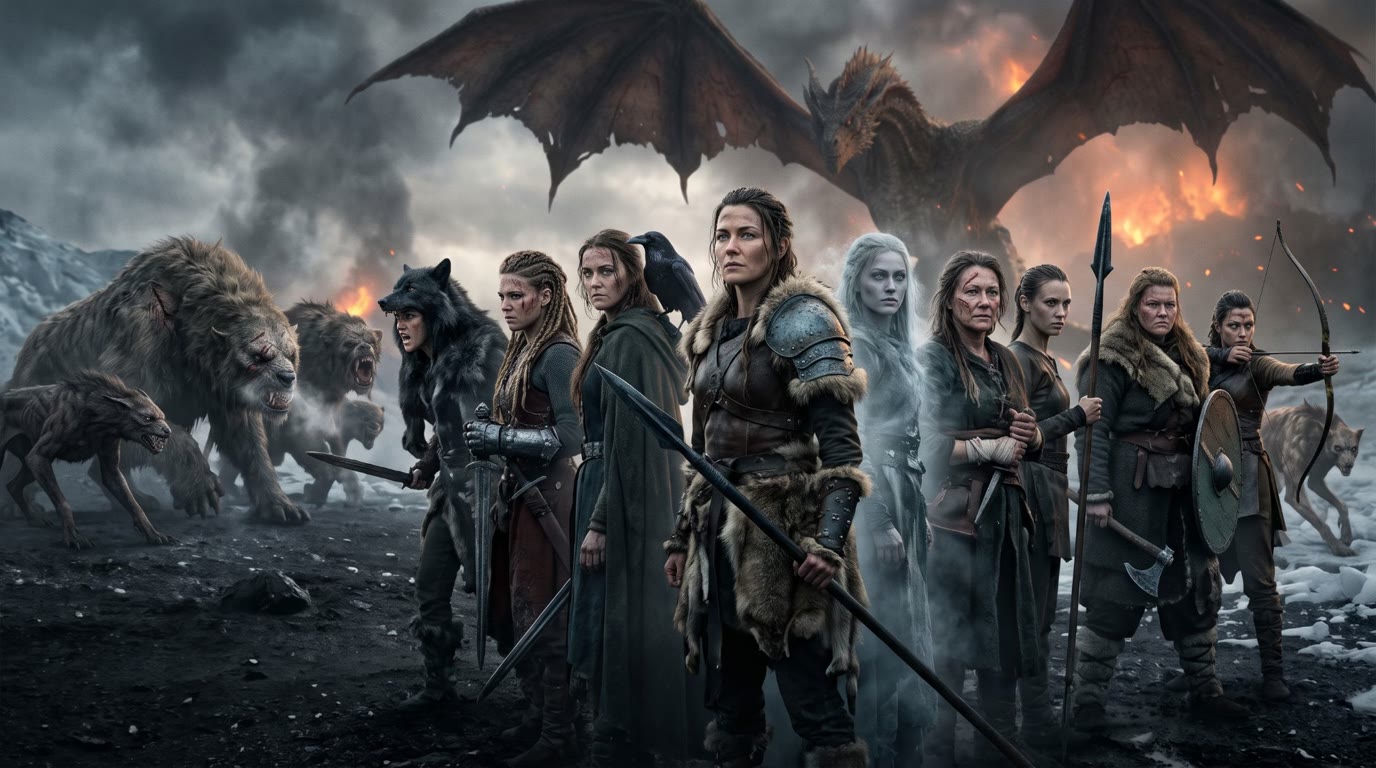
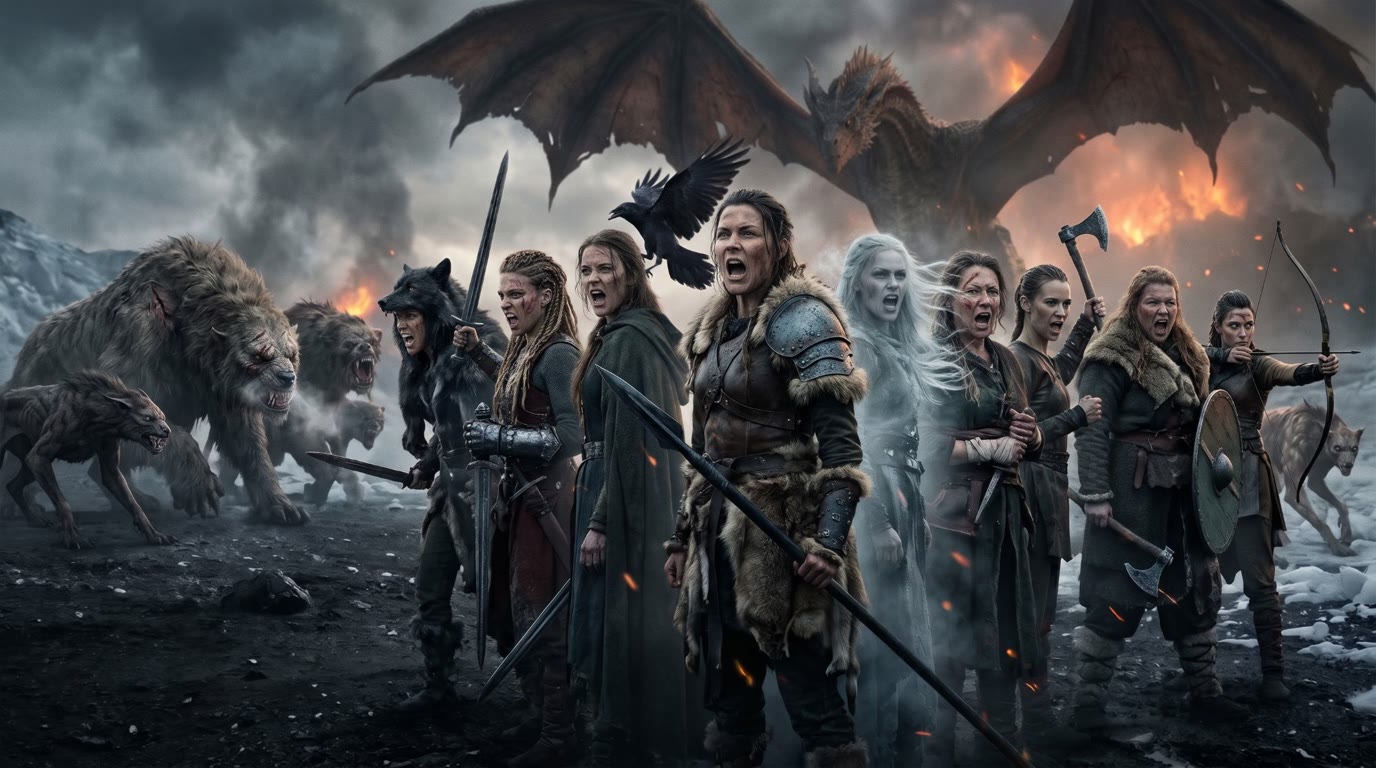
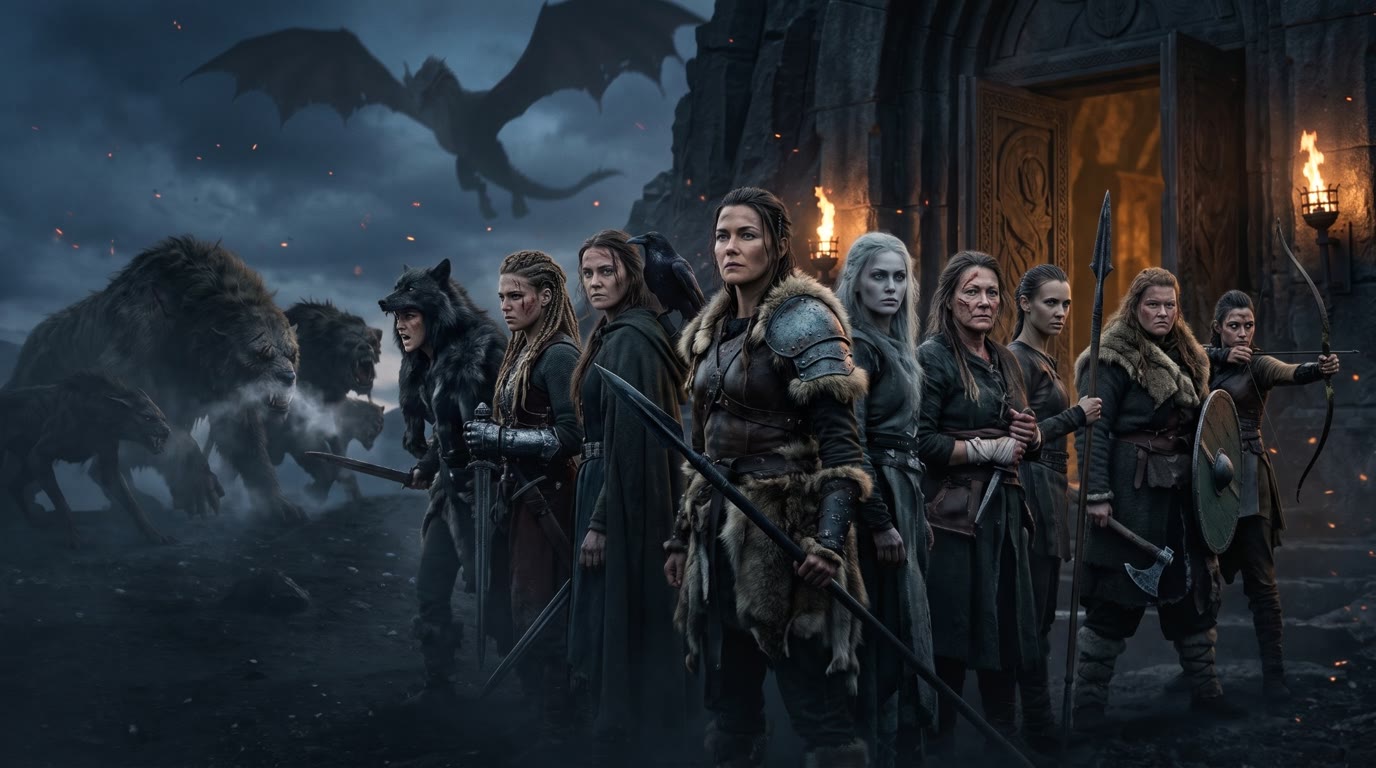
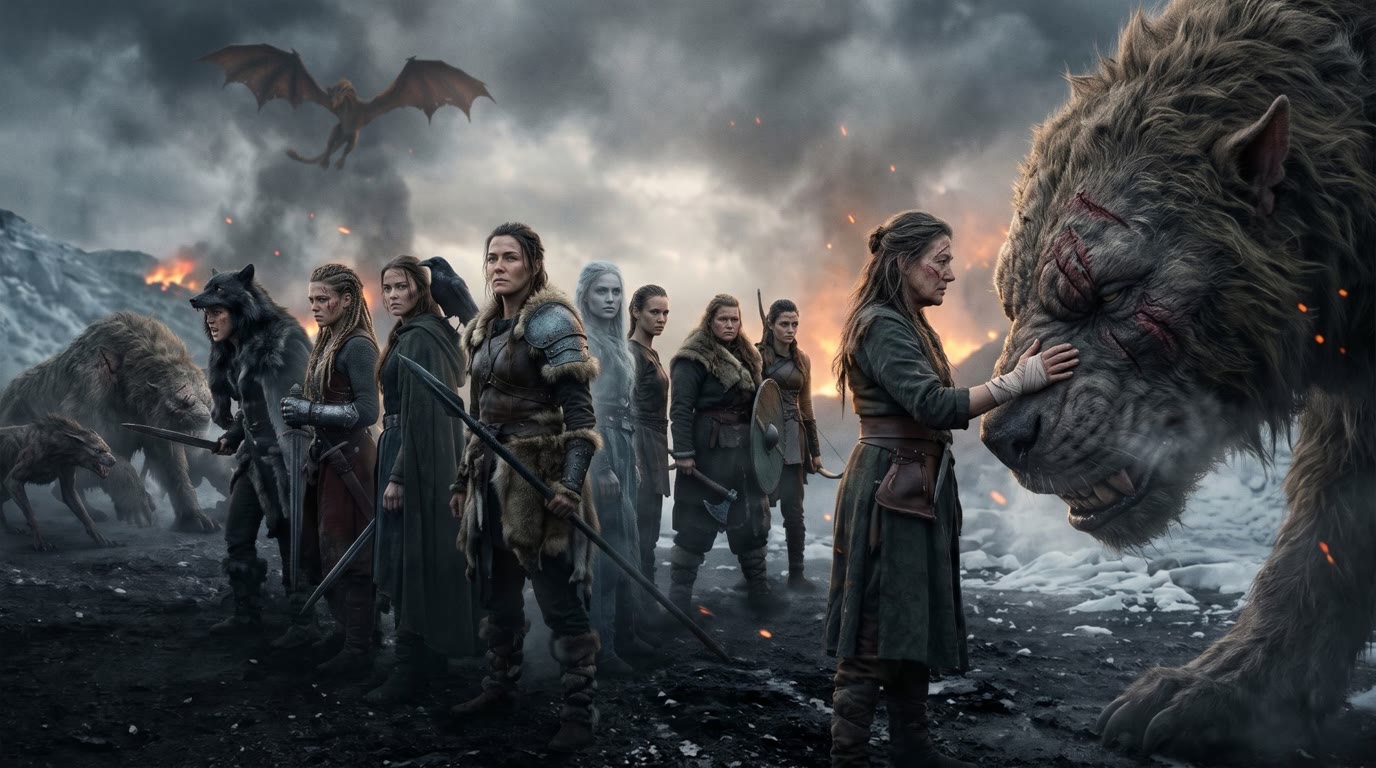
The Huldras are beings of serenity, warmth and welcome that Mystor created to balance the force of his first beasts. They are not goddesses: they are servants of the creator.
The glorious error
Mystor’s first creations were a glorious and uncontrollable error. Beasts shaped in brute force, seized by a blind and primitive fury, a purely violent instinct, without restraint or logic, that drove them to destroy everything around them, themselves included.
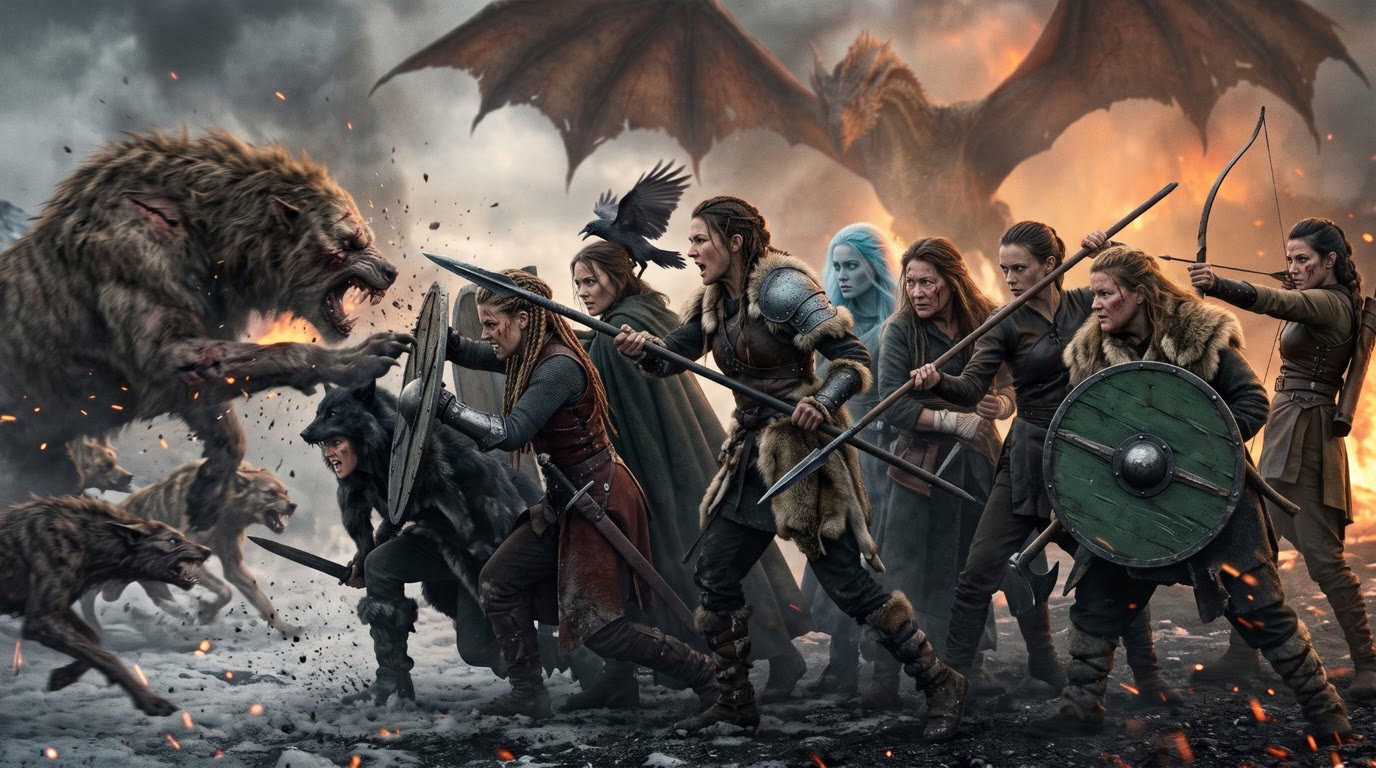
Mystor realized early that brutality cannot be tamed with more brutality. To balance that wild force, he had to create its exact opposite. Even before the Primordial Flame existed, he conceived the Huldras, made to bend the impulse of the beasts through affection. At first, none of it worked: sweetness had no effect before that blind rage, and many Huldras were torn apart without mercy.
The gesture of one Huldra
Everything changed the day a single Huldra chose another path: she gave herself in mating to one of the beasts. All the destructive energy of the beast was discharged, and, for the first time, it found peace. Mystor saw in it the key he had been looking for and put the Huldras at the service of that new purpose.
The pioneer began to instruct her sisters. A hall was raised only for them, where they studied and practiced techniques and forms among themselves, preparing before facing the creatures. Many Huldras became pregnant from these unions, and from the pregnancies were born new creatures, far more evolved than the primitive beasts.
The creatures of Mystor gave rise to three lineages, the Vargor, the Drakhor and the Skaldir, and the welcome of the Huldras was what made the fury of the origin give way to evolution.
The price
The price, across the eras, was brutal. Thousands of Huldras went on being torn apart in the attempts that failed. And, for those who survived, the greater pain came from the bond: when they managed to tame a beast and became attached to it, they suffered in silence to see Mystor destroy those same creatures without remorse, obsessed with remaking them ever more perfect.
The nine survivors
Of the whole lineage subjected to that cycle, only nine survived, among them Theia, and all were imprisoned by their creator. When the Primordial Flame finally gave stable form to Mystor’s creatures, the nine lost any use, and the verdict was extermination.
But Astralis, who had silently watched the martyrdom of those souls, refused to let them die like that. In secret, she forged an explosion in the lair next to the prison. The blast shattered the captivity and hurled the nine Huldras in opposite directions across the Universe: free of Mystor’s sentence, but cast into exile in the vastness.
The Nine Huldras
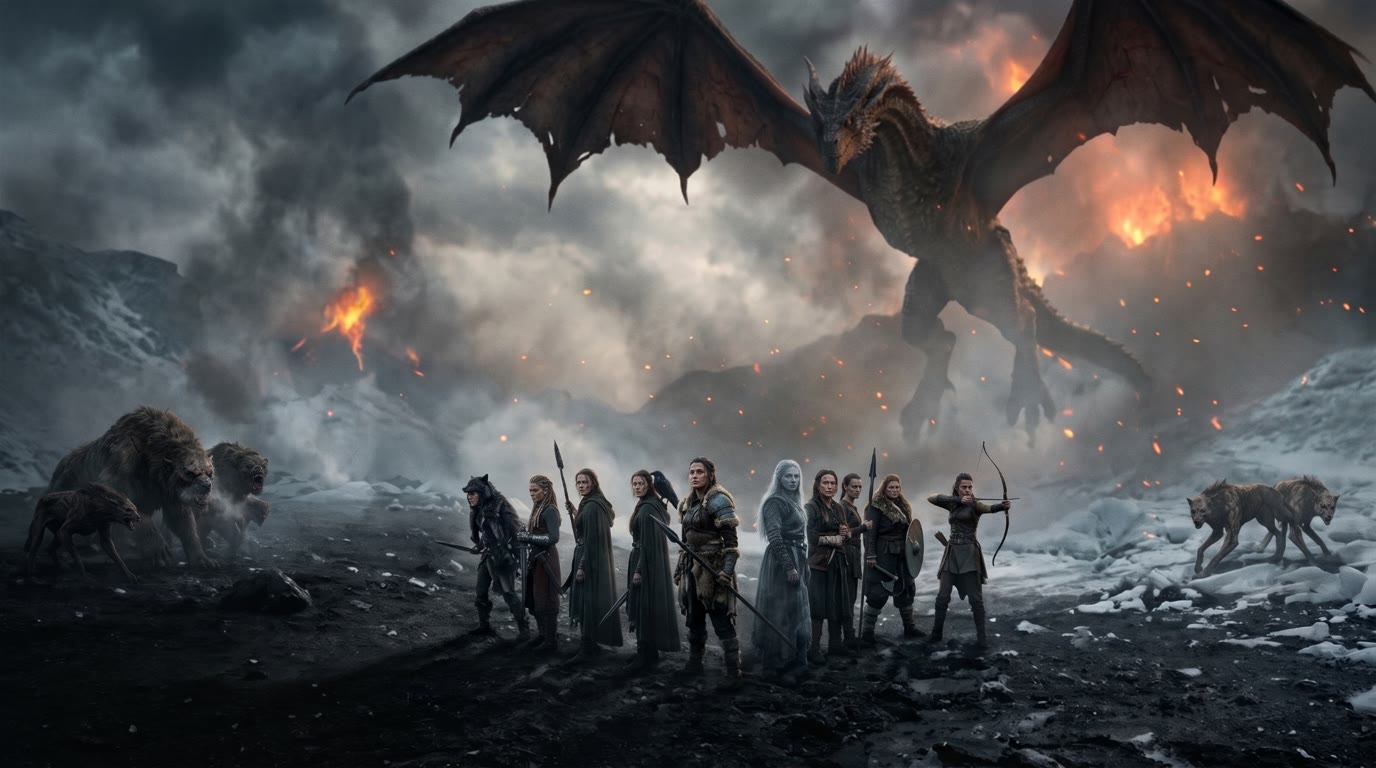
The nine survivors are Sigrún, the First and Mistress of the Hall; Theia, the Wanderer of the Stars; Ylva, the Blood Wolf; Thyra, the Iron Flame; Runa, the Whisperer of Secrets; Eir, the Weaver of Scars; Revna, the Shadow of the Raven; Alva, the Mist of the Dawn; and Liv, the Unshakable Root.
Theia fell in the Cosmic War of Exodus, but her sacrifice made sure the sisterhood never lost its ninth star. In the future, it is Mánadís, the Moon, the daughter of Theia and Nibiru, who awakens to take her mother’s place.
What they knew
The Huldras were not stronger than the Celestial Gods, but they lived one level above them in knowledge. As servants of Mystor, they lived close to their creator and even saw him speaking with other Primordial Gods. Those who survived kept those memories and passed them on, as part of the culture of the sisterhood.
When they told these things to their lovers, the Celestials thought they were only stories. Everything changed when Theia truly met the Celestial Gods, and the other Huldras, in exile, began to approach them too.
They were never the wives of the Celestials: it was they who seduced them. For the sisterhood, each union had a purpose, to keep the blood and the code of the Huldras alive, and the daughters who were born carried forward, from generation to generation, the memory of what their mothers had seen.
Longevity
Because of the important role they held beside Mystor, the Huldras were practically immortal: they did not age, and time barely touched them. Only violence, that of the beasts and of the wars, could take them.
Fighting and survival
From the beginning, the Huldras were tested all the time, under extreme stress and mortal danger, in the conditions in which Mystor created them and set them before the beasts. From that life of trial came the ability they all share: fighting and survival. They are warriors tempered by danger, in the manner of the Amazons and the Valkyries, who learned in the Hall and in exile to fight, to endure and to stay alive when so many sisters fell.
The Code of the Legion
In exile across the Universe, the survivors turned the pain of the past into law. As an exclusively female legion, they swore to preserve the legacy of the Hall above all else: when they gave birth to girls, the daughters were welcomed into the sisterhood, trained in the ancestral arts and destined to expand the lineage of the Huldras across the cosmos. When boys were born, the code was relentless: the boys were left with their fathers. That is how the Titans are born.
There is an exception that exalts the lineage. The daughters born of the Retrogenesis, the process that only the Primordial Gods carry out, are born Celestials, but still carry the blood of the Huldras: they are women of the lineage who became goddesses, without ceasing to belong to their people. Such is the case of Terralia, Venaria and Marvalis. Among the ordinary Huldras, the three have become a belief: that the blood of the sisterhood can give rise to goddesses. The daughters of ordinary unions, without a process, remain Huldras, like Mánadís.
With the fall of Theia, the sacred circle of nine seemed broken forever. But the blood of the Huldras is not erased: in the future, the Moon herself awakens to claim her mother’s vacant place, taking up the mantle of the Ninth Huldra and restoring the ancient number of the sisterhood.
The video where the Huldras face the creatures
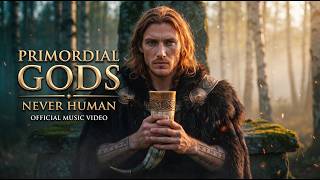
In the music video for Mystor, track 12 of Violin Metal Symphony, the Huldras appear before the terrifying creatures he created. The video also brings together Mystor and Mysteria, Rafandai and other characters.
Who belongs here
The Nine Huldras and the successor who awakens in the future.
Leader of the sisterhood Sigrún The First, Mistress of the Hall The pioneer of the Huldras, who founded the Hall. She is still alive, wandering the cosmos as the silent matriarch of the legion. The successor Mánadís The Moon, the Ninth Huldra of the Future Daughter of Theia and Nibiru, born in the fire of the collision. Destined to awaken in a future era and take her mother's place among the Nine Huldras. Double heritage TheiaHuldra, creation of MystorNibiruNeoprimordial