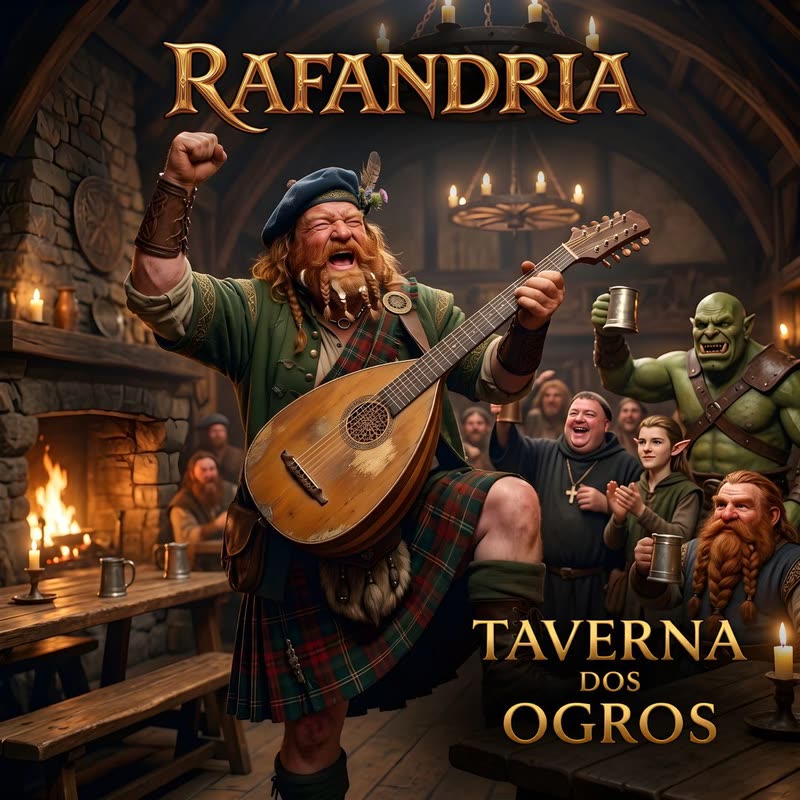
Fergus the Hoarse, also called Fergus Barrelbelly by his tavern friends, is the Ogre Bard, a Herald of the Night and the lead bard of Rafandria’s new story, rooted in Celtic tales. He arrives with Taverna dos Ogros.
The herald who became a bard
Fergus is a Herald who took refuge in the culture of the bards. He has a true ogre’s temper: not that he looks like the ogres we know, but he is huge, coarse, rough, rude and shameless. And that is exactly what makes him so funny.
The songs of Taverna dos Ogros keep singing the stories of Rafandria. The work begins steeped in bardic culture, above all the Celtic and Viking cultures, where Fergus tells the stories in a thoroughly grotesque way, with crude language, plenty of humor and a towering presence.
No friend of the Primordials
Fergus loves to speak ill of the Primordial Gods. To him, every misfortune in the world is their fault: everything bad in humankind and in the cosmos itself comes from the mistakes, the pride and the mess the Primordials have made since the beginning of existence. And he never misses a chance to say so out loud, mug in hand, for the whole tavern to hear. In his Herald form, the gods cannot see him, and Fergus knows it. In his humanized form as Fergus, the gods can see and hear him, but they do not recognize him as a Herald: to them he is only a character. That is why he allows himself to sing the stories in such coarse language.
There is a reason for this grudge, and it shows in Fergus’s lyrics. He sees the violence of the events of the cosmos: worlds that cease to exist, whole lives brought to an end. They are natural events of the cosmos itself, but in his view, with the power the gods have, they should step in and protect their peoples more.
Who he is
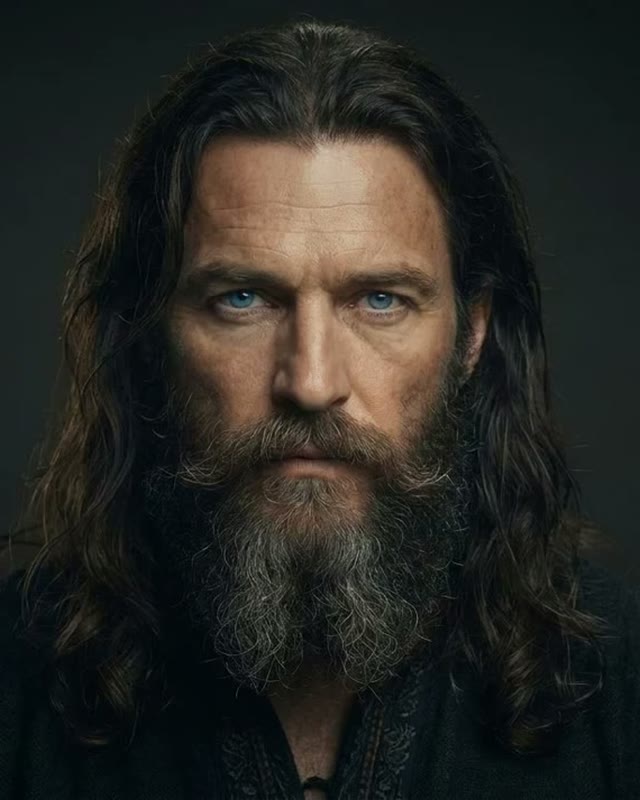
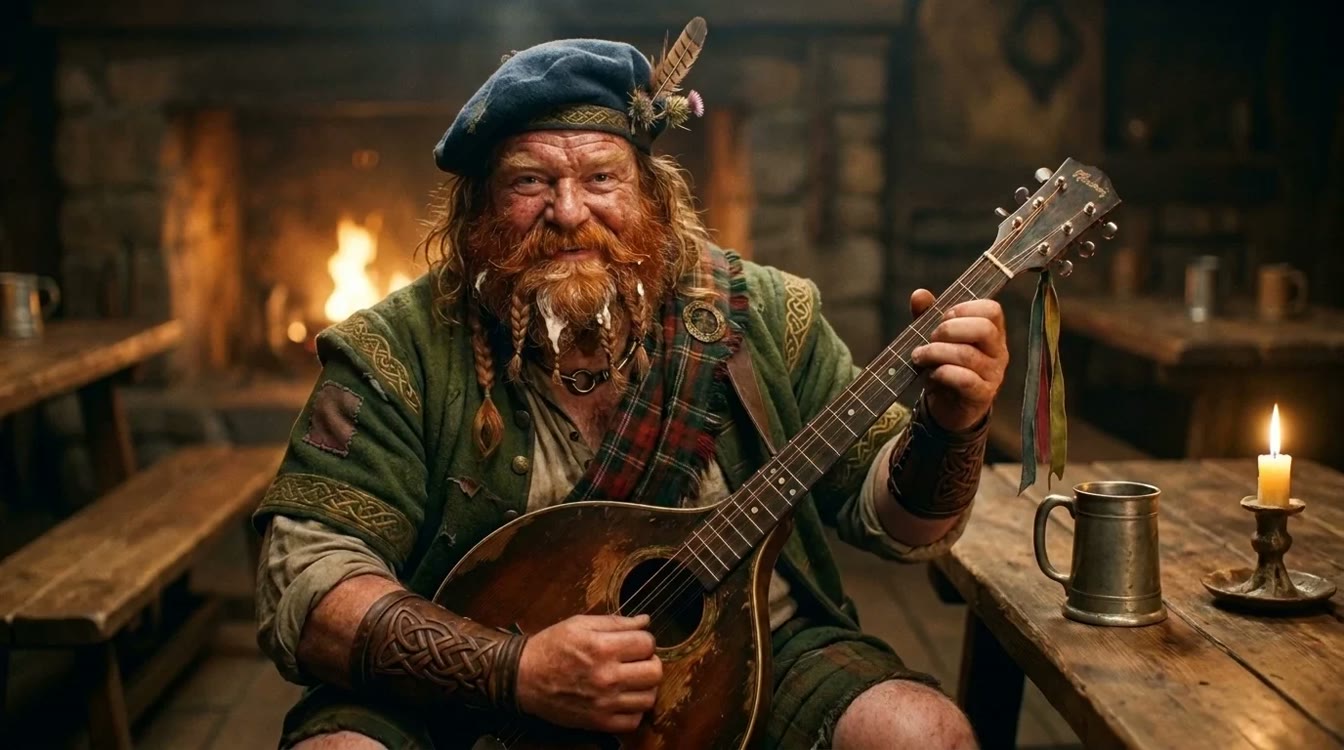
A humanized ogre: in practice, a giant with human features, 2.10 m (6’11”) tall and about 48 years old. Broad shoulders, a barrel chest and the belly of someone who lives on ale and song, yet surprisingly light on his feet when he plays. Ruddy, wind-beaten skin, a broken nose, a scar on his left eyebrow and deep laugh lines. His copper-red beard, huge and braided, is already streaked with grey.
He wears a moss-green wool doublet embroidered with Celtic knots, a patched tartan plaid and kilt, and a blue beret with a pheasant feather and a dried thistle. His instrument is an old Irish bouzouki, scratched and patched, with colorful ribbons tied at the end of the neck.
Fergus’s way
Loud, lively, hilarious and big-hearted. He lives at full volume: he laughs at himself and takes nothing seriously, except the music. Brave to a fault, loyal to his friends and unable to keep a secret, especially if it makes a good song. Beneath the revelry lives a lonely man.
His voice is hoarse, deep and cracked, like someone who sang all night, and it goes from a conspiratorial whisper to a roar of joy within a single verse.
“Hoarse? Me? That’s just seasoning!”
The story
Fergus was born into a clan of highland giants and was cast out for singing indecent verses during a sacred banquet, in front of the clan chief. Since then he has roamed the taverns of Rafandria’s Celtic world, gathering ancient tales and rewriting them his own way, which does not always please the gods.
The ancient Irish poets, the filí, were feared because their satire was believed to wound a king’s face. Fergus is the comic version of that: a poet whose sharp tongue is still a weapon, only now it makes the whole tavern cry with laughter. Every tale he tells leads to a different Celtic story, and the music is the doorway in.
Gallery of Fergus the Hoarse
6 photos